Flooring installation
Floating / Click Flooring Installation
Click-lock plank systems installed over underlayment — faster to install and a practical choice over a sound, flat slab.
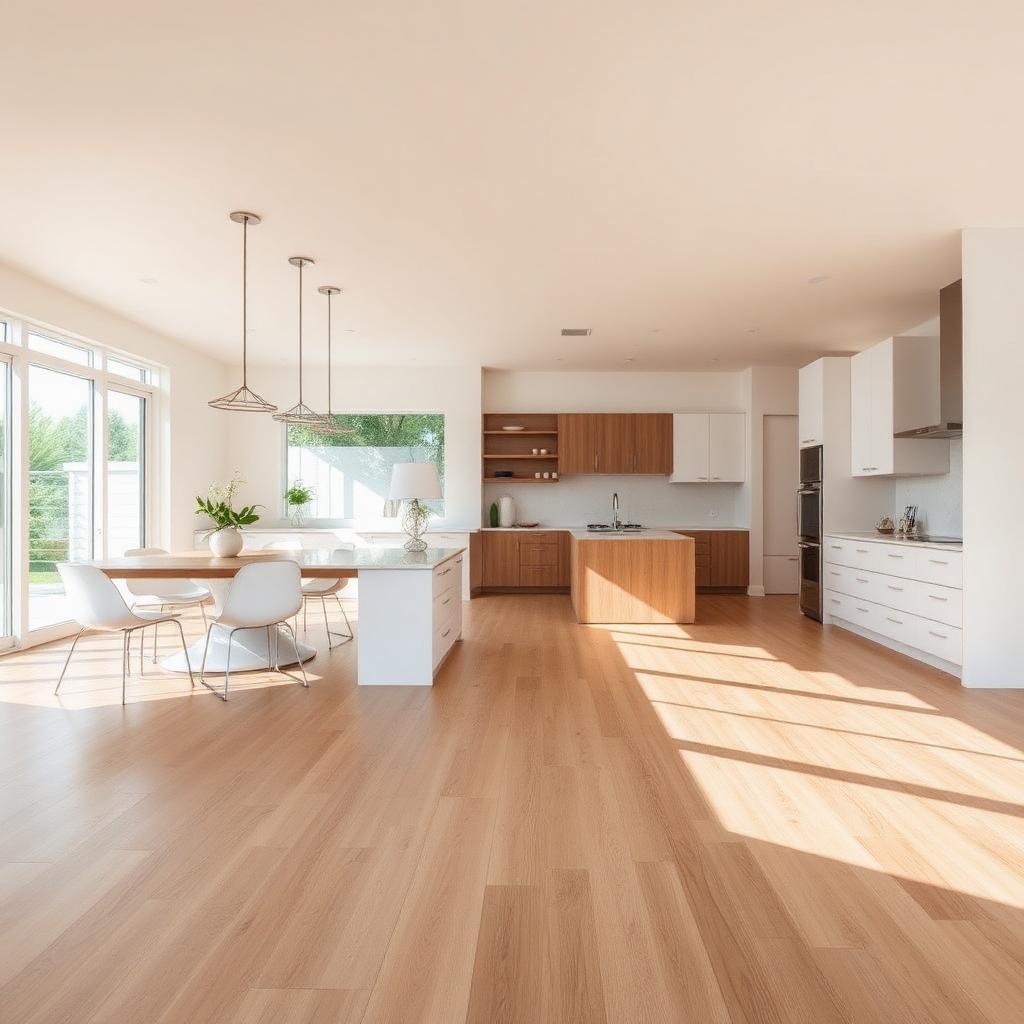
A floating floor locks together into one continuous sheet that rests on underlayment. Nothing bonds to the slab, so the whole assembly moves as one piece and is held in place by its own weight and the perimeter trim. That single fact explains almost every advantage and every limitation of the method.
Because there is no adhesive, there is no adhesive cure time. A bedroom or hallway can usually be walked on the same day it is installed, which is why floating is the common pick for occupied homes, rental turnovers between tenants and condo owners who cannot empty the unit for long.
When floating is the right call: bedrooms, hallways, closets and mid-size living areas; click-lock LVP, laminate and engineered plank; rooms where furniture keeps the field broken up; a floor that may need a section lifted later to reach something underneath; and any job where speed and a lower prep bill matter more than the last few percent of underfoot solidity.
When floating is the wrong call, and we will say so at the estimate: very large uninterrupted open-plan runs, where the assembly can read hollow and expansion movement has nowhere to hide; slabs with real dips that the budget will not cover flattening; rooms with wide glass exposure and big daily temperature swings; heavy rolling loads; and buildings whose modification rules specifically require a bonded floor. In those cases glue-down is the honest recommendation.
Subfloor flatness still matters, even though nothing is being bonded. A floating floor spanning a low spot flexes at the joints every time someone walks over it, and the locking edges eventually work loose or peak. Manufacturers publish their own flatness tolerance for each product — we measure the slab against the tolerance for the material you actually chose rather than quoting a generic number, and grinding or patching goes in the scope where the readings call for it.
Underlayment does three jobs at once in South Florida: it cushions minor slab texture, it slows moisture coming up through concrete, and it carries the sound rating. Some planks ship with a pad already attached, in which case adding a second pad is a mistake — the assembly gets too soft and the joints suffer. We match the underlayment to the product and the slab rather than defaulting to whatever is on the truck.
Condo sound requirements are their own conversation. Many South Florida buildings set a minimum impact-sound rating for the underlayment on floors above the ground level, and the number and the paperwork differ building to building. We cannot approve your assembly on the association's behalf, but we will build to the requirement you give us and put the underlayment spec in writing so it can be submitted. Ask management for the rules before material is ordered, not after.
Transitions and long runs get planned before the first row goes down. Expansion gaps are left at every wall, column, door jamb and threshold, and a long continuous run or an L-shaped floor through a doorway may need an intermediate transition so the field is not asked to move more than the product allows. Where the new floor meets tile, carpet, a balcony slider or an entry door, a profile handles the height change — and in condos, door swings and threshold heights leave very little margin, so we check them at the measurement.
Bringing your own material is fine. Many of our floating-floor customers have already bought their click-lock plank from a retailer or an online supplier. What we check before quoting the labor is whether the product suits the method: a locking system in good condition, a plank thickness and core that work over your slab, and whether an attached pad changes the underlayment choice. Tell us the brand and product line, or text us a photo of the box label, and we will confirm compatibility before the estimate is written — it is a much better time to catch a mismatch than on installation day.
What's included
- Click-lock LVP, laminate and engineered plank
- Underlayment and vapor retarder selected for the slab
- Expansion gaps at walls, columns and fixed objects
- Transition strips at tile, carpet and exterior doors
Where it works
Suitable applications
- Occupied homes and rentals where the space needs to be usable quickly
- Bedrooms, hallways, closets and mid-size living areas
- Slabs with minor variation that has been ground or patched flat
- Projects where a section may need to be lifted later for access
- Condo units where the building allows a floating assembly with a rated underlayment
- Rental turnovers on a fixed handover date
FAQ
Floating / Click questions
- Will a floating floor sound hollow?
- It can in very large open runs, which is one reason we sometimes recommend glue-down instead. A quality underlayment and a flat slab make a noticeable difference, and we tell you honestly when a room is big enough that glue-down is the better call.
- Does my condo allow a floating floor?
- Many buildings do, provided the underlayment meets the sound rating in their modification requirements. Some specify glue-down. Ask management for the requirements before material is ordered and we will match the assembly to it.
- Can a floating floor go over my existing tile?
- Sometimes, if the tile is sound, well bonded and flat, and the added height works at doors and thresholds. We look at it on site and give you a straight answer rather than assuming.
- Floating or glue-down — which should I choose?
- Floating is faster, cheaper to prep and easy to lift later. Glue-down feels more solid underfoot, handles very large open rooms better and is what some buildings require. Room size, slab condition, building rules and how long you can be out of the space usually decide it. Our glue-down page and the glue-down vs floating guide walk through the trade-offs.
- How flat does my slab need to be?
- Flat enough to meet the tolerance the flooring manufacturer publishes for the product you chose — that figure varies by material, so we measure against the right one instead of quoting a single number. Where the slab is out, grinding or patching is added to the estimate before installation.
- Do I need a moisture barrier over a concrete slab?
- Over concrete we plan for a vapour retarder, either built into the underlayment or laid separately. Slabs here can push moisture upward long after they are dry to the touch, and the retarder protects the underside of the plank.
- Will it gap or peak over time?
- That usually traces back to a missing expansion gap, a run longer than the product allows without a transition, or a slab that was never flattened. Those three things are what we plan for before installing, which is why the measurement visit matters.
- I already bought my flooring — can you install it?
- Usually, yes. We regularly install customer-supplied click-lock plank. Before quoting labor we confirm the locking system, core and thickness are right for your slab and underlayment plan — text us a photo of the box label and we will confirm before the estimate.
Service area
Where we install
Miami-Dade and Broward, residential and commercial.
Also available
Other flooring services
Luxury Vinyl, LVP & LVT Installation
Waterproof luxury vinyl plank and tile installed over properly prepared subfloors — a practical fit for South Florida homes and condos.
Learn moreLaminate Flooring Installation
Durable, budget-friendly laminate installed with proper underlayment, expansion gaps and clean perimeter detail.
Learn moreHardwood & Engineered Wood Installation
Engineered and solid wood flooring installed with careful layout, acclimation and moisture testing.
Learn moreHardwood Floor Sanding & Refinishing
Existing hardwood floors repaired, sanded, stained where desired and refinished — restoration instead of replacement, across Miami-Dade and Broward.
Learn moreCommercial Flooring Installation
Flooring installation for offices, retail spaces, rentals and multi-unit properties, scheduled around your operations.
Learn moreGlue-Down Flooring Installation
Full-spread adhesive installation for a solid, quiet floor — often the right call for large open areas and commercial traffic.
Learn moreBaseboards & Trim Installation
New baseboards, quarter-round, thresholds and transitions installed so the floor is finished properly at every edge.
Learn moreFloor Removal, Replacement & Subfloor Prep
Old flooring removal, debris haul-out, cleaning, leveling and moisture checks so the new floor sits on a sound surface.
Learn moreStair Treads & Stair Flooring Installation
Stair treads, risers and nosing installed to match the new floor — the slowest, most detailed part of most projects.
Learn moreFree estimate
Tell us about your project
Send the details and we'll get back to you to confirm measurements, material and timeline.
Two ways to get started
No long forms. Address, date, name and phone is all we need to get moving.
See our work on InstagramNo obligation. We'll only use your details to respond to this request.
Want a price? Book a free estimate in under a minute.
Residential or commercial, anywhere in Miami-Dade or Broward.
Not ready for a visit?